Sleep
It's 3am and you're awake again. Or you slept eight hours and still feel wrecked. Sleep isn't the simple thing the wellness industry sells you — it's the platform everything else runs on. Here's the machine, why it breaks, and the short list of levers that actually fix it.
It's 3:14am. You're awake — eyes open, heart going slightly too fast, running the spreadsheet of everything you screwed up today and everything you'll screw up tomorrow. You didn't choose this; your body did, and it had reasons. Most men file this under insomnia, a character flaw, a thing to white-knuckle. It's none of those. It's a signalling failure with a name and a fix — and by the end of this you'll know which lever broke. Sleep sits upstream of all of it: your energy, your hormones, your mood, your face. You can out-train and out-supplement almost anything in your stack. You cannot out-run a brain you never let clean itself.
The lie of eight hours
Here's the lie: get your eight hours and you're covered. So you do — in bed by eleven, up at seven — and you still drag a body that isn't quite yours through the first half of the day. The number was never the point. You can spend eight hours in bed the way you can spend eight hours in a gym doing nothing: present, horizontal, and getting almost none of the adaptation you came for. Sleep isn't time logged. It's work performed — and most men are sleeping straight through the shift.
The two shifts
A night isn't one thing; it's two factories running in sequence. Deep sleep — the physical-repair and housekeeping shift — is front-loaded into the first few hours. REM — where memory and emotion get filed and wired in — stacks up toward morning. They run in roughly 90-minute cycles, four to six a night.
And during deep sleep the brain does something it simply can't do awake: it takes out the trash. The cells shrink, the spaces between them open up, and cerebrospinal fluid floods through and physically rinses out the day's metabolic waste — including the proteins linked to Alzheimer's. 1 Picture a night-shift cleaning crew that can only clock in once you're under; cut the shift short and they arrive to a locked building. (How much gets cleared is still being argued over in the labs — but that deep sleep is when the brain does its housekeeping isn't in doubt.)
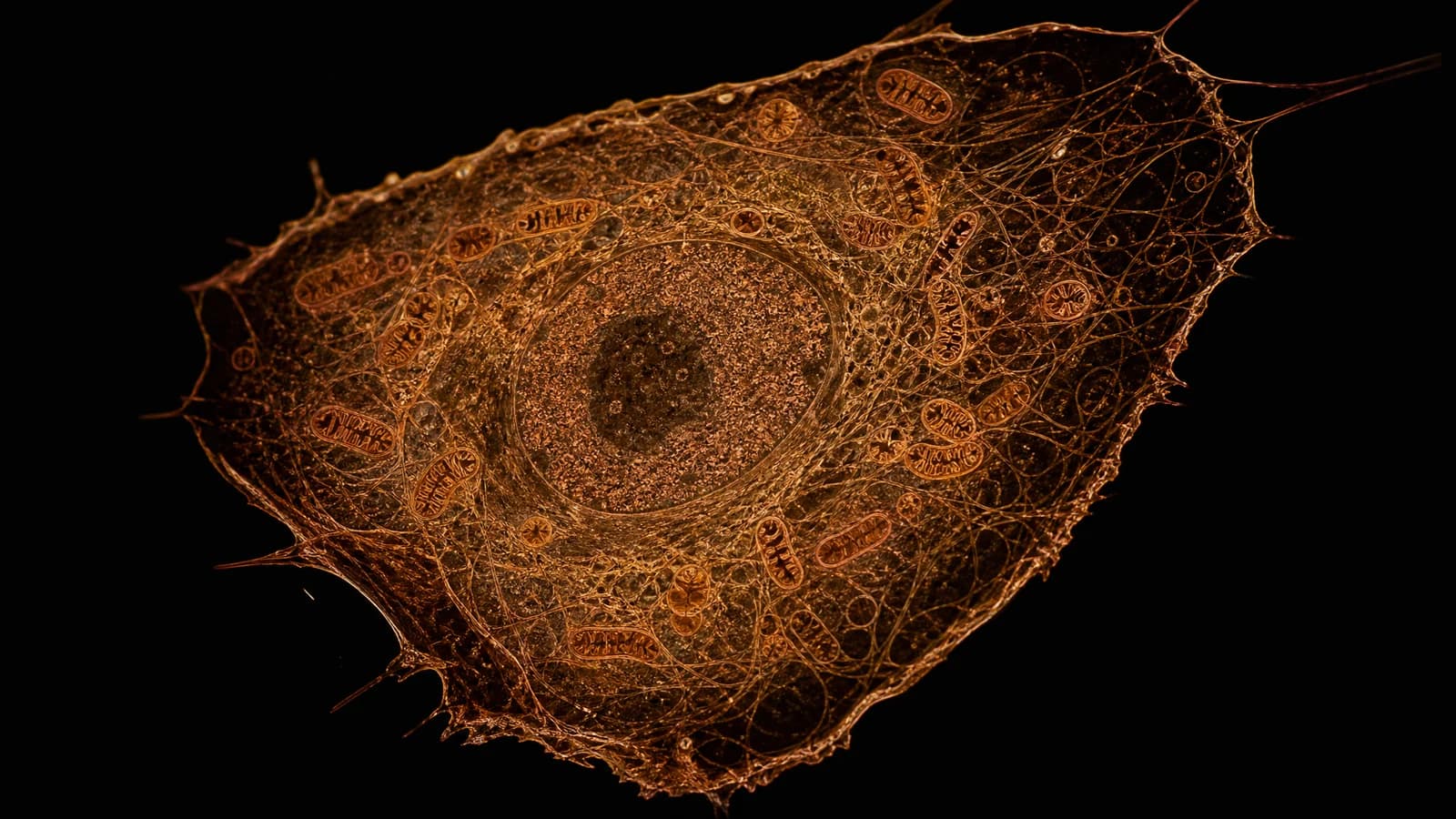
“Wakefulness is low-level brain damage, while sleep is neurological sanitation.”
The architecture has a consequence men ignore: the night spends its best currency first. Your deepest, most restorative sleep is paid out in the opening hours. So going to bed at 2am instead of 11pm doesn't cost you 'three hours of sleep' — it skips the three hours that mattered most and keeps the cheap ones. Slide the hours and watch which shift gets cut:
What an hour less actually costs
Deep sleep — the brain’s wash cycle — runs early. REM stacks up toward morning. So cutting a night short doesn’t shave evenly off the top; it lops the back off. Slide your hours and watch what gets cut.
A full night: the early deep sleep that flushes the brain, and the late REM that wires it in.
Why you wake at 3am
There's nothing magic about the clock-time. For a standard 11-to-7 sleeper, the back half of the night is lighter, more dream-heavy and more easily disturbed — that's just where the architecture goes. Stack a few things on top and you get a reliable wake-up. Your cortisol starts climbing in the back third of the night, getting you ready to rise. Alcohol consolidates the first half, then rebounds and fragments the second. 2 Stress keeps the whole system half-aroused, so the smallest dip in sleep depth pops you awake. And with age, the night just gets lighter — wake-time climbs about ten minutes per decade after thirty. 3
The point isn't that you're broken. Your body woke you at 3am on purpose — it ran exactly the program you wrote with the late wine, the 11pm email and the dread. Different inputs, different night. (One men's-specific culprit worth naming: if you're up to pee every night, that isn't 'hydration' — get your prostate looked at.)
Tired anyway? The hidden one
Now the harder case: you sleep enough — eight, nine hours — and you're still flattened. The wellness answer is 'sleep more.' Usually that's exactly wrong. The real causes, in order of how often they're missed: quality, not quantity — fragmented sleep wrecks you even when the total looks fine; circadian misalignment — your body clock and your schedule in different time zones, the weekday-debt-weekend-catchup whiplash; and the big one in men, undiagnosed sleep apnea.
Apnea is the most under-diagnosed thing in men's health — roughly twice as common in men, and the large majority of cases never get caught. 4 You stop breathing dozens of times an hour, never remember it, and wake feeling like you barely slept because you barely did. If you snore, wake unrefreshed no matter the hours, and feel sleepy through the day, that's a conversation with a doctor — not another supplement. One more counterintuitive flag: regularly sleeping over nine hours is usually a symptom, not a solution — of inflammation, low mood, or the fragmented sleep above. Long sleep is a signal to investigate, not a habit to be proud of. 5
“Drowsiness is red alert.”
The levers that actually move it
Enough diagnosis. Here's what moves the needle — and notice the most powerful levers are the boring ones. Chase these inputs and the hours mostly take care of themselves.
Start with the two that cost nothing. A fixed wake time, seven days a week, is the single highest-leverage move — it anchors the entire clock, weekends included. Then light: get bright light in your eyes within the first 30–60 minutes (outdoors beats any lamp), and guard the dark at night — dim the lights, get off the bright screens, let your body read the evening as evening. The screen issue is less about the exact wavelength and more about intensity plus what you're doing — doomscrolling keeps you wired — but the move is the same: a dim, calm wind-down.
When should you go to bed?
Wake at the end of a cycle, not the middle of one, and you skip the groggy fog. Pick your fixed time — the calculator works back in 90-minute cycles.
Set lights-out for one of these
Full recovery
The sweet spot
Minimum — runs a debt
6 cycles · ~15 min to fall asleep
Cycle length varies person to person (80–110 min). These are starting points, not a clock to obey — the fixed time matters more than the exact minute.
Then the most underrated lever there is: temperature. Your core has to drop about a degree to fall and stay asleep, so two things help — a cool room (~18°C / 65°F), and, counterintuitively, a warm bath or shower 1–2 hours before bed, which pulls heat to your skin and dumps it, widening the gradient. It's the best-supported behavioural trick for deeper sleep we have. 6 If you run hot or share a bed, an active cooling layer — an Eight Sleep pod, or the cheaper Sleepme / Chilipad — is the one big-ticket sleep gadget that genuinely earns its price. But cool the room first; that part's free.
A wind-down framework worth stealing is 10-3-2-1-0: no caffeine 10 hours out, no big meals or alcohol 3 hours out, no work 2 hours out, screens down 1 hour out, 0 snoozes. Not every number is gospel — caffeine's real cutoff is closer to eight hours for most people — but as a nightly checklist it bakes in most of what matters. The caffeine one surprises everyone, because it lingers far longer than the buzz: 7
How late can your last coffee be?
Caffeine’s half-life is ~5–6 hours, so it lingers. Set your dose and bedtime, and this works back to the latest you can drink and still be mostly clear by lights-out.
This pushes your cutoff into the early afternoon. Front-load your caffeine.
And 'how do I fall asleep faster?' Mostly, falling asleep fast is a receipt — it's what prints when you've already paid for the inputs above. But a few techniques genuinely help by flipping your nervous system out of fight-or-flight: 4-7-8 breathing (a long exhale is a direct line to the calming, parasympathetic side of the system), progressive muscle relaxation, and the cognitive shuffle — picture random, unconnected images (apple, harbour, bicycle), which mimics the scattered mental state of natural sleep onset and crowds out the rumination. Ignore anyone promising sleep 'in ten seconds.' The technique might be real; the stopwatch never is.
The stack, and the score
Once the foundation holds, a small stack helps at the margin — but keep your expectations honest: these nudge, they don't knock you out. The sane shortlist: magnesium (glycinate or L-threonate, ~150mg) — modest evidence, but safe and cheap; glycine (~3g) — lowers core temperature, the best of the boutique options; and L-theanine (100–200mg) — calm without sedation. The one to be careful with is melatonin: it's a timing signal, not a sleeping pill, and it works at 0.3–0.5mg. Skip the 5 and 10mg gummies — they overshoot the dose, leave you groggy, and keep melatonin elevated into the next day. 8
And measure — because your own sense of how you slept is the most confident liar in your body. A tracker (an Oura ring, a Whoop) turns last night's wine or late meal into a number you can actually learn from. One caveat that protects your sanity: a tracker measures sleep, it doesn't fix it, and chasing a perfect score can itself keep you up. Use the trends; ignore the daily noise.
“Sleep is critical to the function of the brain’s waste removal system, and this study shows the deeper the sleep the better.”
Sleep is the platform
Sleep is not recovery from your life. It's the platform your life runs on. The man who sleeps well isn't lazy or soft — he's the one who understood the system first, protected the single input that compounds into all the others, and stopped trying to hack around the one thing he can't fake. Fix your wake time, guard your dark, cool your room, protect the shift. Everything else in this entire Lab works better downstream of it.
Once sleep is holding, build the rest of your protocol around it.
Engineer your protocol →References
- 1Xie, L. et al. — "Sleep drives metabolite clearance from the adult brain." Science, 342(6156), 2013 (Nedergaard lab). Note: the magnitude of clearance during sleep is now actively debated — Miao et al., Nature Neuroscience, 2024, report the opposite using a different tracer method; the dispute is unresolved.
- 2Ebrahim, I.O. et al. — "Alcohol and sleep I: effects on normal sleep." Alcoholism: Clinical & Experimental Research, 37(4), 2013.
- 3Ohayon, M.M. et al. — "Meta-Analysis of Quantitative Sleep Parameters From Childhood to Old Age in Healthy Individuals." Sleep, 27(7), 2004.
- 4Young, T. et al. — "The occurrence of sleep-disordered breathing among middle-aged adults." NEJM, 328(17), 1993; Peppard, P.E. et al., Am. J. Epidemiology, 177(9), 2013 (~2:1 male predominance; majority undiagnosed).
- 5Cappuccio, F.P. et al. — "Sleep Duration and All-Cause Mortality." Sleep, 33(5), 2010. (Long sleep is observational and most likely a marker of underlying illness, not a cause.)
- 6Haghayegh, S. et al. — warm-water bathing before bed and sleep, meta-analysis. Sleep Medicine Reviews, 46, 2019. Mechanism: Raymann, R.J.E.M. et al., "Skin deep: enhanced sleep depth by cutaneous temperature manipulation." Brain, 131(2), 2008.
- 7Drake, C. et al. — "Caffeine effects on sleep taken 0, 3, or 6 hours before going to bed." Journal of Clinical Sleep Medicine, 9(11), 2013.
- 8Zhdanova, I.V., Wurtman, R.J. et al. — "Melatonin Treatment for Age-Related Insomnia." J. Clinical Endocrinology & Metabolism, 86(10), 2001. (0.3 mg restored sleep efficiency without the side-effects of higher doses.)