Cellular Energy
Zoom all the way in. Strip away the sleep and the training and the food, and every bit of energy you have comes down to one thing: mitochondria making ATP, one molecule at a time. Here's the machine — why it slows with age, and the two compounds that genuinely tune it.
This is the bottom of the stack — the layer everything above is really about. It's also where the compounds finally earn a mention, because this is the only place they act. Understand the machine first, and you'll see exactly why a peptide is the last 10%, not the first.
How a cell makes energy
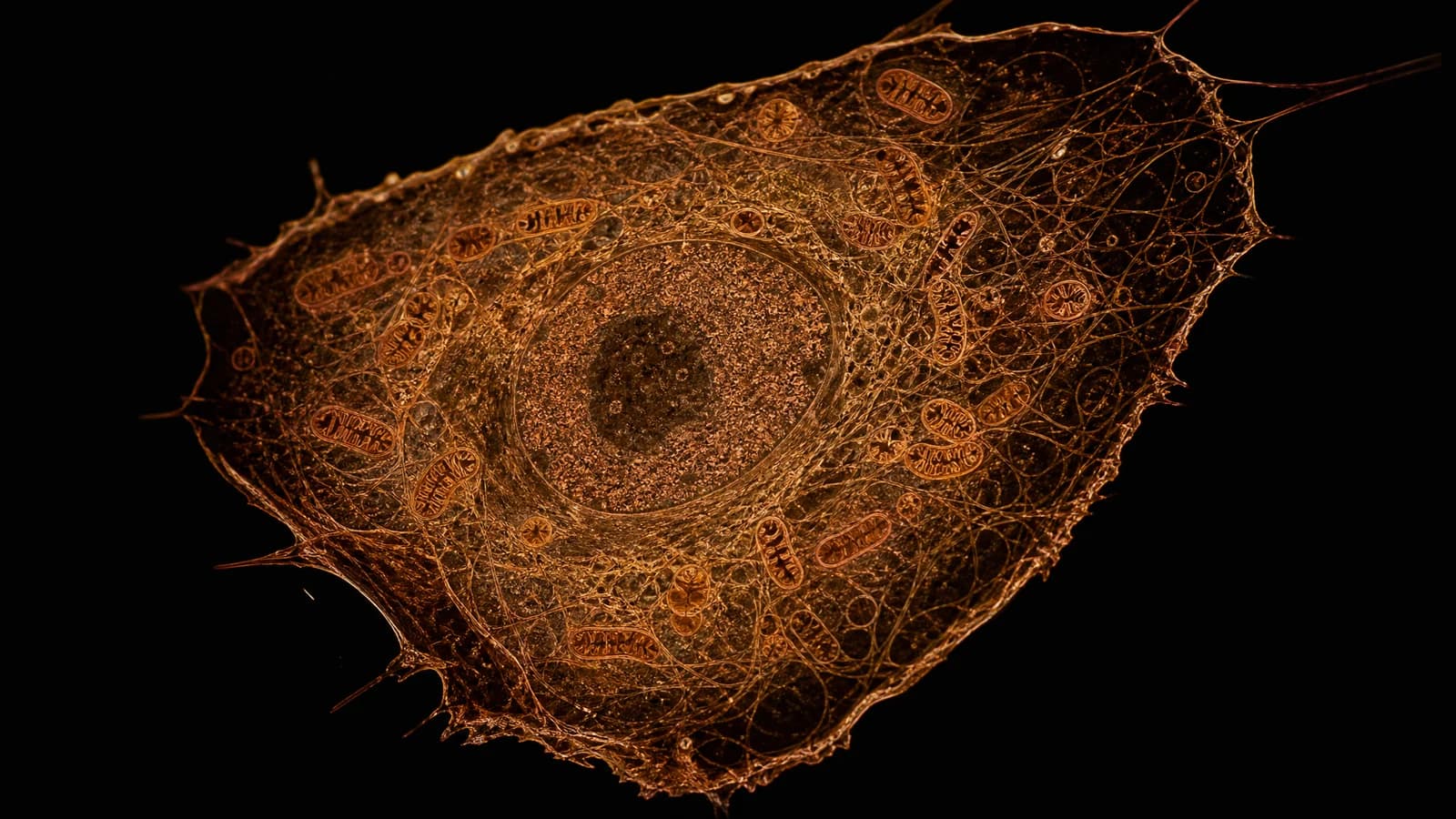
Energy, in the only sense that matters, is ATP — the molecule your mitochondria build from food and oxygen, and the currency every cell spends to do anything at all. Mitochondria are the power plants: thousands per cell, packed densest in the tissues that work hardest — heart, muscle, brain. They take what you eat, run it through the electron transport chain, and turn it into clean, spendable energy.
Why the engine slows
Two things wreck output. Either you have fewer, weaker mitochondria — what age and a sedentary life do to you — or the ones you have run in bad conditions: poor sleep, inflammation, glucose chaos. And there's a chemical clock running underneath it: NAD+, the coenzyme mitochondria run on, falls steadily with age across your tissues, and mitochondrial function falls with it. 2 That decline is the door the compounds below knock on.
The compounds that tune it
Only now do the molecules belong in the conversation. MOTS-c is a peptide encoded inside your own mitochondrial DNA; in the research it promotes metabolic homeostasis and improves insulin sensitivity — it nudges the cell toward burning fuel more efficiently. 1 NAD+ is the coenzyme at the centre of mitochondrial energy production, the one that fades with age; boosting it improves mitochondrial function in the models. 2 They're real, and they're the finishing layer. Run them on a body that doesn't sleep and you've bought expensive urine.
The cellular edge — once the foundation is real:


See where these fit in a protocol built around your goal.
Engineer your protocol →References
- 1Lee, C., Zeng, J., Drew, B.G. et al. — "The mitochondrial-derived peptide MOTS-c promotes metabolic homeostasis and reduces insulin resistance." Cell Metabolism, 21(3), 2015.
- 2Rajman, L., Chwalek, K. & Sinclair, D.A. — "Therapeutic potential of NAD-boosting molecules: the in vivo evidence." Cell Metabolism, 27(3), 2018.